On a cool morning at Nsanjiko Primary School in Lilongwe, Standard Six girl Jane, 11, sits in a crowded classroom, a new notebook in hand.
For the first time in months, she does not have to borrow a page from a friend’s notebook or sit through lessons unable to write.
“I didn’t have a notebook or pen,” she says, opening the new notebook. “This came just in time.”
For her, this is about access to education.
About 80 percent of Malawians live below the poverty line pegged at $3 per day, reports the World Bank.
Widespread poverty, hunger, lack of learning materials and unstable households haunt poor children long before examinationsdetermine outcomes.

In rural communities such asNsanjiko, the school day often begins with lack of basics.
“Sometimes, we come to school hungry,” says Nsanjiko Secondary School Form Three student Falison Mathews, 14.
Chronic hunger fuels malnutrition, stunting a third of Malawian children under five.
The shadow of early deprivation follows children into adulthood, slowing their growth, learning and productivity.
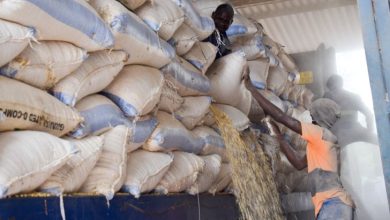
Recently, SOS Children’s Villages Malawi and the Malawi Telugu Association (Mata) donated flour, cooking oil, soya pieces, clothing, soap, shoes and learning materials to about 1 000 children in Nsanjiko Village, Traditional Authority Chadza in Lilongwe District.
Over 800 primary school pupils and 27 secondary school students received notebooks and pens under the targeted family strengthening programme.
“Education is not just a resource, but a right. Together, we are making it accessible for all,” said Mata chairperson Pappu Rao after presenting the donation, estimated at K8.65 million.
The country has expanded access to basic education since the abolishment of school fees in 1995.
However, it is grappling to turn rising enrolment into meaningful learning amid low completion rates and uneven learning outcomes, particularly low in rural areas where most Malawians live in poverty.
“The flour, cooking oil and soya pieces will ease the prevailing food shortage. It’s huge relief for our family,” says one mother.
Evidence shows that when families are less preoccupied with survival, children are likely to attend school consistently, concentrate, excel and progress.
Malawi 2063, the country’s long-term development strategy, makes access to quality education pivotal to human capital development, a pillar of the transformation of the nation into an inclusive, industrialised, self-reliant middle-income economy by the centenary of self-rule.
Education, nutrition and social protection are part of the deal as quality early childhood development gives young Malawians a solid start in life.
“This partnership gives hope to families and ensures that children can focus on their education without worry,” says Chief Chadza. “A child cannot achieve quality education on an empty stomach. A family cannot prioritise schooling when survival is uncertain.”
Back in class, Jane bends over her notebook, carefully writing her name on the first page.
It is a small act, but a stepping stone to the future Malawians want. What the country becomes by 2063 hinges on every child getting quality education and imagining a future without worrying about basics.